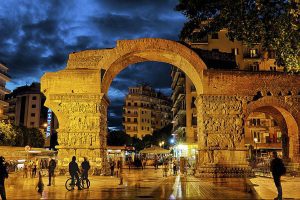
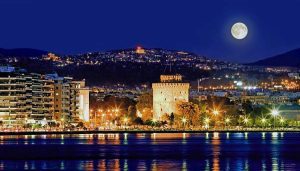
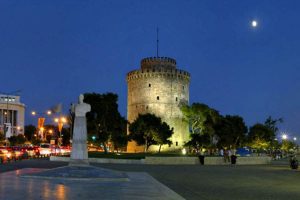
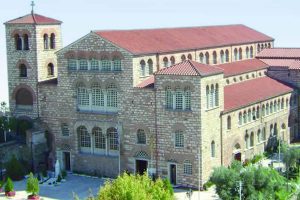
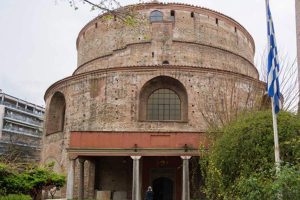
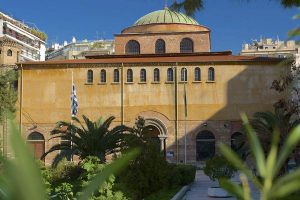
Thessaloniki is the second largest city in Greece with a unique history, character and style. Thessaloniki , due to its geographical location and history, was the crossroads between West and East, the Balkans and the Aegean. It was founded in 316 BC by King Cassander. Thessaloniki was named after the wife of King Cassander, who was the half-sister of Alexander the Great. Thessaloniki was and is a port city of strategic importance, military and commercial, both during Roman and Byzantine times. The signs of the Byzantine Empire have remained indelible in the city, in the numerous monuments, churches and old walls. A visit to the city of Thessaloniki will give you the opportunity to admire the Byzantine architecture of hundreds of years.
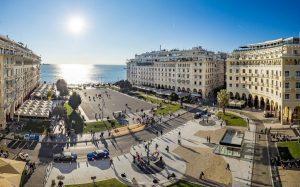
Thessaloniki was conquered by the Ottomans in 1430 and liberated in 1912, while it should be noted that the city suffered serious damage during the two world wars. However, the event that determined the city’s current appearance was the great fire of 1917, during which most of its Levantine neighborhoods were destroyed. After the Second World War, Thessaloniki became a wonderful, modern European city, the largest commercial center of Northern Greece, with a population today reaching 1,200,000 inhabitants. The wide streets and avenues, the beautiful squares, the cafes, the bars, the clubs, the countless taverns and restaurants characterize the beautiful city of the North.
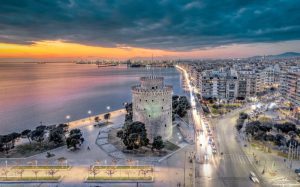
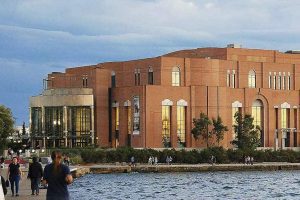
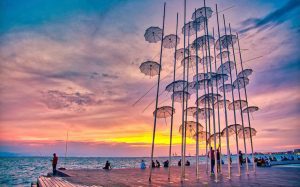
Residents and visitors of Thessaloniki have the opportunity to enjoy a walk along the beach, which is approximately five kilometers in length, from the Concert Hall to the port.
The beach of Thessaloniki has a linear front with relatively limited depth and great length, which gives it the characteristics of a narrow coastal front.